
Warmth That Starts Where You Walk
Radiant floor heating installation and service in Brunswick
If your Brunswick home has cold tile floors in the bathroom or drafty rooms where the baseboard heat never quite reaches, radiant floor heating can change how comfortable those spaces feel. Instead of blowing hot air that rises to the ceiling, radiant systems heat the floor itself, and that warmth moves up naturally through the room. You feel it first underfoot, then everywhere else, without the noise of a furnace kicking on or the dry air that comes with forced heat. In Maine winters, that kind of steady warmth makes a real difference.
A and O Plumbing and Heating Services installs radiant floor heating in both new construction and retrofit projects throughout Brunswick. The team works with hydronic systems that circulate heated water through tubing installed beneath the floor, and they also handle electric mat systems for smaller areas like bathrooms or entryways. Whether you are building from the ground up or adding radiant heat to an existing room, they use proven installation methods to make sure the system performs reliably for years.
If you want to add radiant heating to your home, reach out to discuss your layout and heating goals.
How the system is installed beneath your floors
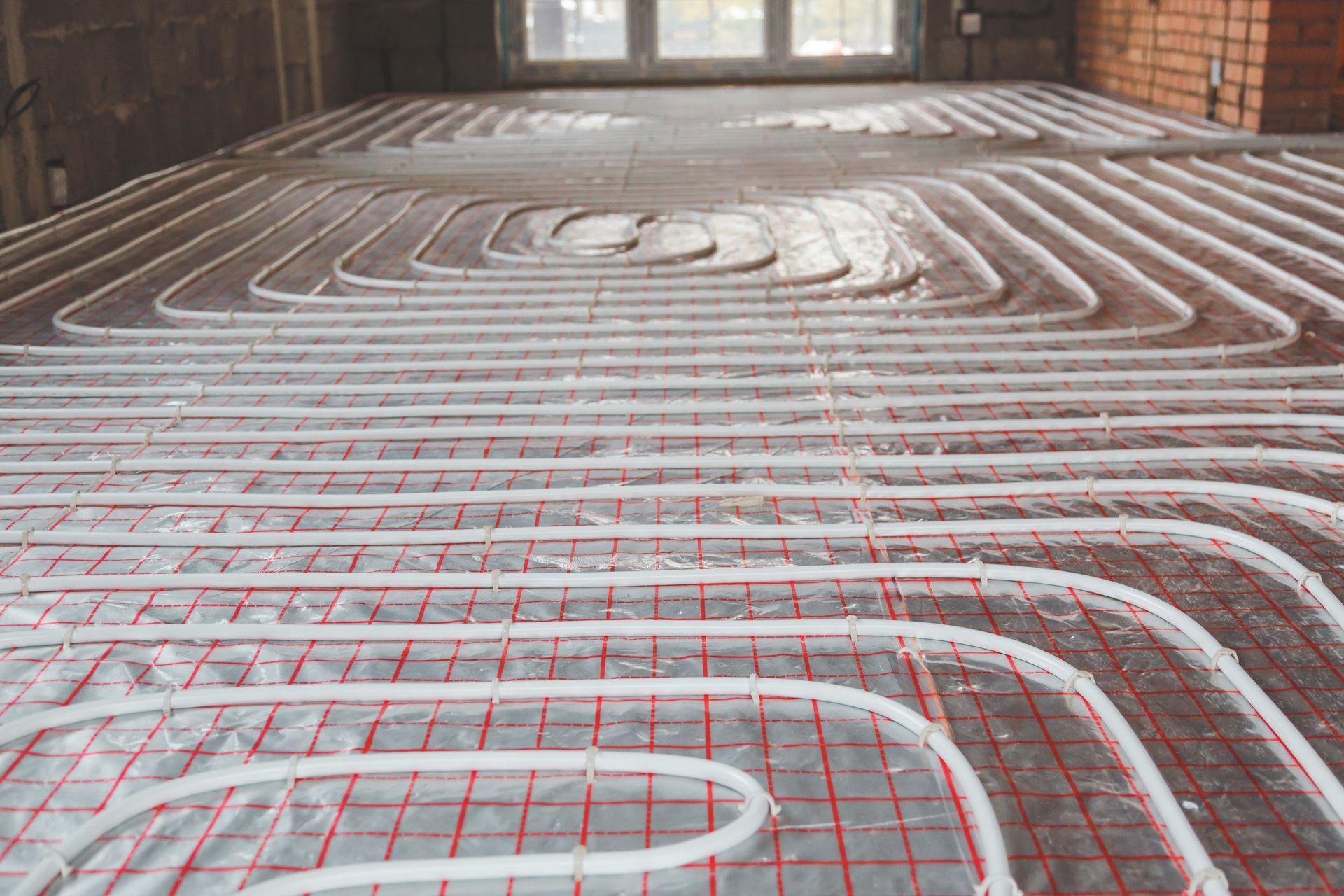
When you schedule radiant floor heating installation in Brunswick, the crew begins by evaluating the room layout, floor type, and existing heating system. For hydronic installs, they lay out flexible tubing in a serpentine pattern across the subfloor, secure it in place, and connect it to a boiler or water heater that supplies heated water. For electric systems, they roll out heating mats before tile or other flooring is installed on top. Once the floor covering is in place, they connect the system to a thermostat and test it to confirm even heat distribution.
After the system is active, you will notice that cold floors are gone and the room feels warmer without cranking up the thermostat. The heat rises evenly from the floor, so there are no cold spots near windows or along exterior walls. Many homeowners report being able to lower their overall thermostat settings because the radiant system heats more efficiently than baseboard or forced air.
Radiant systems work well under tile, engineered hardwood, laminate, and concrete. They are not recommended under solid hardwood due to potential moisture issues. The installation process requires access to the subfloor, so it is easiest to install during new construction or major renovations, though retrofit options exist for certain floor types and room configurations.
Common concerns before moving forward
Homeowners often want to know how radiant heating compares to other systems, how much work is involved, and whether it makes sense for their home. These answers address the practical questions that come up during planning.
A and O Plumbing and Heating Services installs radiant floor heating systems in Brunswick homes where consistent warmth and comfort matter. If you are planning a renovation or building new and want to explore radiant heating options, get in touch to talk through what will work best for your space.